

Why Vein Symptoms Flare Up After Busy Workweeks 🧍♀️💼
By the end of a demanding workweek, many people notice their legs feel heavier, tighter, or more uncomfortable than usual. What starts as mild fatigue on Monday may turn into swelling, aching, or throbbing discomfort by Friday evening.
This pattern is especially common in people dealing with vein disease, where circulation already struggles to move blood efficiently back toward the heart. Long work hours, limited movement, and physical strain can place additional pressure on the vascular system, making symptoms noticeably worse over time.
⏳ Why Symptoms Build Up Throughout the Week
Circulation problems rarely appear suddenly. In many cases, pressure gradually accumulates day after day, especially when work routines involve repetitive physical strain or prolonged inactivity.
When veins are already weakened, extended periods of sitting or standing can make it harder for blood to move upward efficiently. As pressure increases, symptoms often become more noticeable later in the week.
🧍 Prolonged Standing and Circulation Pressure
Jobs requiring long hours on your feet can significantly increase strain on the lower limbs. Standing for extended periods forces veins to work harder against gravity to keep blood flowing properly.
Over time, this constant pressure may contribute to swelling, aching, or visible vein enlargement. Workers in healthcare, retail, hospitality, and service industries commonly experience this type of vascular stress.
Persistent standing without movement breaks can also reduce the natural muscle contractions that normally help blood move efficiently through the legs.
💺 Long Periods of Sitting Can Also Trigger Symptoms
Sedentary work environments create a different but equally problematic issue. Sitting for hours reduces lower-body movement, slowing circulation and encouraging blood pooling in the legs.
Office workers often experience stiffness, heaviness, or discomfort after long stretches at a desk, especially when movement throughout the day is limited.
😴 Fatigue Makes Symptoms Feel Worse
Physical exhaustion affects more than energy levels. After demanding workdays, muscles become less active and blood flow support decreases, making existing vein symptoms feel more intense.
This combination of muscular exhaustion and vascular pressure often explains why fatigue and leg discomfort become closely connected after stressful workweeks.
💧 Swelling Becomes More Noticeable Over Time
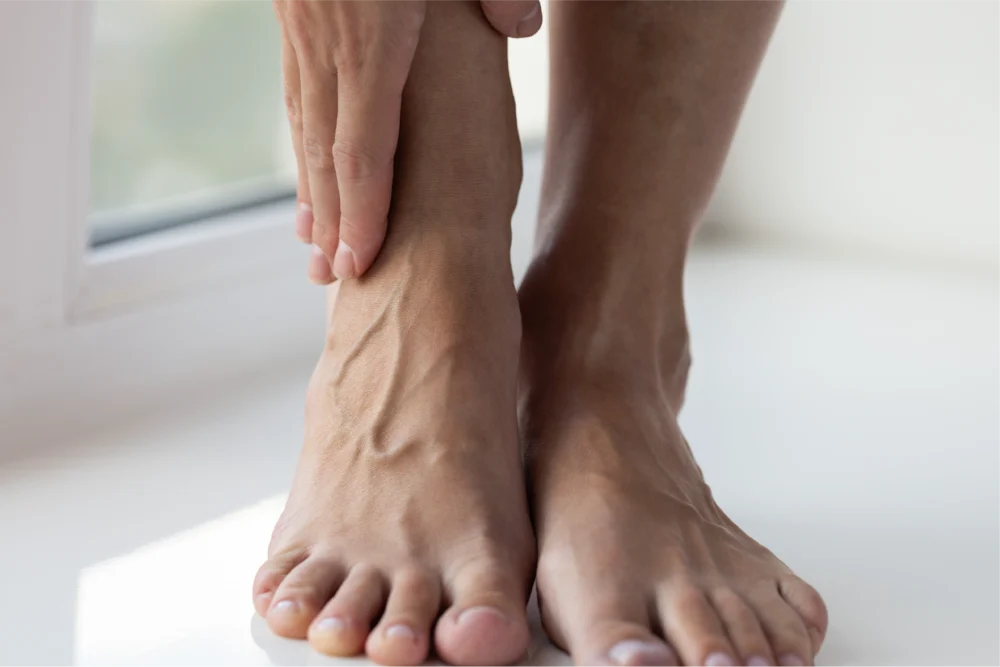
As pressure builds inside weakened veins, fluid may begin collecting in surrounding tissues. This commonly causes puffiness around the ankles, calves, or lower legs later in the day.
Fluid retention around the ankles or lower legs is one of the most common signs that circulation is under increased strain. Symptoms may temporarily improve with rest or leg elevation, only to return once the work cycle begins again.
⚠️ Stress and Workload Can Intensify Discomfort
Stress itself can indirectly affect healthy movement habits. During busy weeks, people are more likely to skip walking breaks, remain seated longer, stay dehydrated, or neglect physical recovery. These patterns place additional pressure on the vascular system and can gradually worsen lower-leg discomfort over time.
- 🧍 Long hours on your feet increasing vein pressure
- 💺 Extended sitting reducing blood flow efficiency
- 😴 Physical exhaustion worsening discomfort
- 💧 Fluid buildup causing lower-leg puffiness
- ⏳ Symptoms becoming stronger later in the week
Together, these factors create the pattern many patients notice after demanding schedules.
🩺 When Symptoms Shouldn’t Be Ignored
Occasional tired legs after work are common, but recurring heaviness, aching, fluid buildup, or visible vein changes should not automatically be dismissed as routine exhaustion. Persistent symptoms may indicate an underlying vascular condition rather than simple overwork.
When these symptoms continue worsening week after week, medical evaluation can help determine whether an underlying venous condition is contributing to the discomfort.
🌿 Why Work Habits Matter for Vein Health
Busy schedules place constant stress on the body, especially when movement patterns remain repetitive for long periods. Whether someone spends hours standing, sitting, or physically active without recovery, the vascular system absorbs that strain over time.
Recognizing how work routines affect vein health is often the first step toward preventing symptoms from becoming more persistent or disruptive over time.
Andy Sharifi
Position