
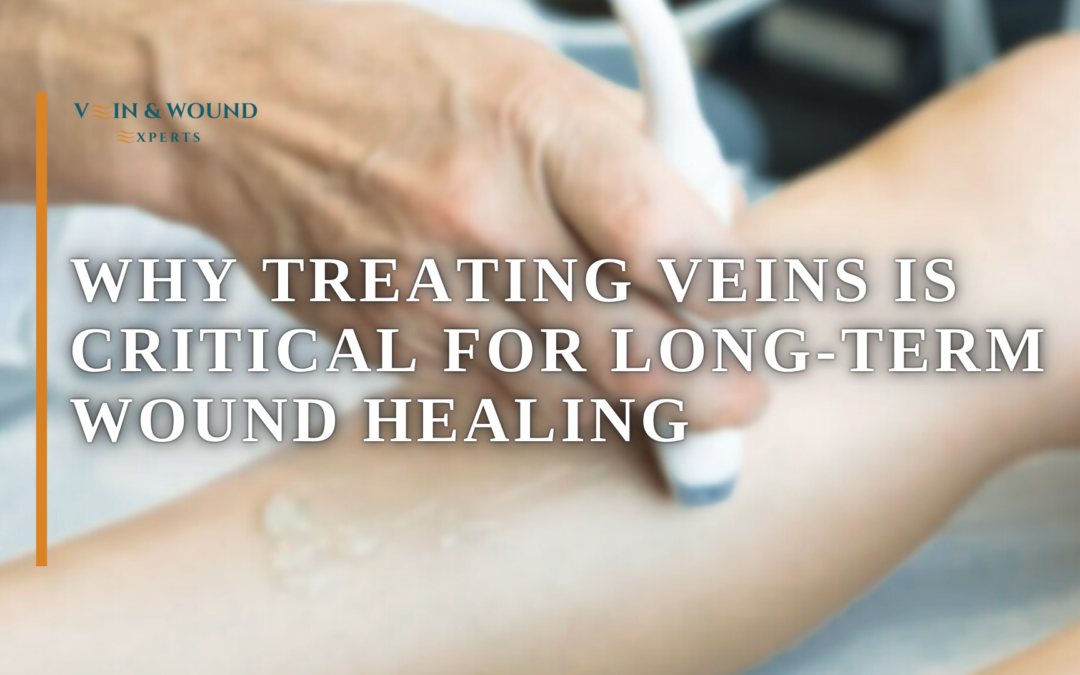
Why Treating Veins Is Critical for Long-Term Wound Healing 🦵🩹
Vein disease is one of the most underestimated barriers to successful wound healing. From a medical standpoint, no wound exists in isolation from the circulatory system that supports the surrounding tissue. When venous blood flow is impaired, even well-managed wounds can stall, recur, or worsen despite proper surface care. Long-term healing depends not only on treating the wound itself, but on correcting the vascular conditions that prevent tissue repair.
How Venous Circulation Directly Affects Wound Repair 🩸🔬
Healthy wound healing relies on consistent oxygen delivery, nutrient transport, and removal of metabolic waste. Veins play a critical role in this process by maintaining balanced pressure within the microcirculation. When venous return is compromised, pressure builds in the lower extremities, slowing capillary exchange.
This environment deprives tissues of oxygen and allows inflammatory byproducts to accumulate. As a result, the biological signals needed for wound closure become disrupted, and healing timelines extend far beyond what would be expected in healthy circulation.
Why Wounds Fail to Heal When Veins Are Ignored 🚫🦶
Standard wound care focuses on infection control, moisture balance, and tissue protection. These steps are necessary, but insufficient when venous dysfunction remains untreated. Elevated venous pressure causes persistent fluid leakage into surrounding tissue, creating swelling and inflammation that physically prevent wound edges from closing.
In these cases, wounds may partially heal only to reopen repeatedly. This cycle is not a failure of wound management, but a sign that the underlying venous system is continuing to undermine tissue recovery.
The Link Between Chronic Venous Pressure and Skin Breakdown 🧬🩺
Sustained venous hypertension weakens the skin over time. Inflammatory changes reduce elasticity, impair immune response, and make tissue more susceptible to injury. Minor trauma that would normally heal quickly can evolve into chronic wounds when venous flow is poor.
As circulation deteriorates, skin becomes fragile and less resilient. This explains why many lower-leg wounds appear spontaneous, without a clear injury, in patients with long-standing venous problems.
Signs That a Wound Has a Venous Origin 🔍🦿
Venous-related wounds tend to follow recognizable patterns that distinguish them from arterial or pressure-related ulcers.
• 🟢 Slow healing despite consistent wound care
• 🟢 Swelling and skin discoloration around the wound
These features indicate that the tissue environment itself is compromised, making surface-level treatment alone ineffective.
Why Treating Veins Changes Healing Outcomes 📈🧠
Addressing venous dysfunction reduces pressure within the lower extremities, restoring healthier circulation at the capillary level. When blood flow improves, oxygen delivery increases and inflammation decreases, allowing normal healing mechanisms to resume.
This shift often transforms a chronic, non-healing wound into one that progresses steadily toward closure. Treating veins does not replace wound care—it enables it to work as intended.
Integrated Medical Perspective on Veins and Wounds 🩻🩹
Effective management requires evaluating both circulation and tissue health together. Duplex ultrasound imaging allows physicians to identify venous reflux or obstruction that may be preventing wound resolution. Once venous flow is corrected, wound therapies become significantly more effective.
Vein & Wound Experts in Downey, CA approach wound healing through this integrated lens, recognizing that durable results depend on restoring vascular balance, not just managing surface symptoms.
Long-Term Healing Depends on Vascular Stability 🦿📉
Without addressing venous dysfunction, wounds are likely to recur even after temporary closure. Repeated breakdown increases infection risk, prolongs disability, and places ongoing strain on patients and caregivers.
Treating vein disease is therefore not an optional step in wound care, but a foundational one. From an expert perspective, long-term wound healing is ultimately a vascular issue, and lasting recovery begins when the venous system is restored to proper function.
Andy Sharifi
Position