
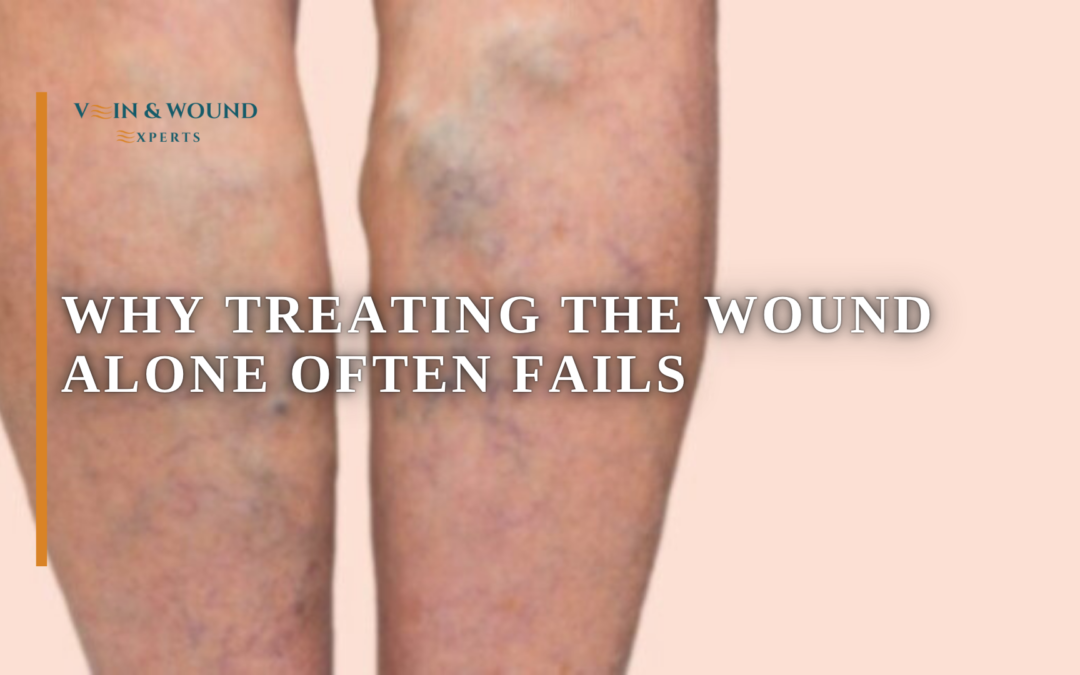
Why Wound Care Alone Is Not Enough 🩹🦵
Chronic wounds on the lower legs are often approached as surface problems, yet healing frequently stalls when deeper circulation issues remain unaddressed. Many patients experience repeated flare-ups, slow closure, or complete non-healing because the visible injury is only one part of a much larger vascular picture.
🧬 How Circulation Drives the Healing Process
Healthy wound repair depends on efficient blood flow. Oxygen, nutrients, immune cells, and growth factors must all reach damaged tissue in adequate amounts. When veins struggle to return blood effectively to the heart, pressure builds in the lower extremities. This congestion interferes with oxygen delivery and allows waste products to accumulate around the wound bed. Over time, tissue becomes fragile, inflamed, and less capable of regeneration.
In these cases, treating the wound alone may temporarily improve appearance but fails to correct the conditions that caused the injury to persist. Dressings and topical agents cannot restore circulation or normalize venous pressure. Without addressing the vascular environment, healing remains incomplete or short-lived.
🔍 Why Surface-Level Care Reaches Its Limits
Topical therapies play an important supportive role, but they are designed to manage symptoms rather than causes. Many clinicians observe that wounds initially respond, then plateau or reopen. These wound care limitations are not a failure of technique; they reflect the complexity of circulation-driven disease.
Several physiological barriers explain why surface care struggles on its own:
- Reduced oxygen tension slows cell division and collagen formation
- Persistent swelling stretches skin and disrupts fragile new tissue
- Inflammatory byproducts delay immune response and repair cycles
- Microcirculatory damage prevents consistent nutrient delivery
When these factors persist, even meticulous wound management cannot achieve durable closure.
🩺 The Hidden Role of Vein Disorders
Chronic leg wounds are frequently linked to underlying vein disorders that impair blood return from the lower limbs. Venous reflux, valve failure, and prolonged pressure weaken capillaries and surrounding tissue. Over time, skin becomes thin, discolored, and prone to breakdown.
Because symptoms develop gradually, patients may focus on the wound itself rather than the vascular changes that preceded it. This delay allows damage to progress quietly. Medical evaluation that includes circulation assessment helps distinguish between wounds caused by trauma, pressure, or venous dysfunction. Identifying the source guides appropriate escalation of care.
🧠 Why Integrated Evaluation Changes Outcomes
Effective healing often begins with a broader diagnostic approach. Rather than isolating the wound, clinicians assess blood flow patterns, swelling behavior, skin condition, and patient history. This integrated model reframes the wound as a signal of systemic imbalance rather than an isolated injury.
A comprehensive evaluation typically considers:
- Venous pressure dynamics during standing and walking
- Patterns of edema throughout the day
- Skin texture, color, and temperature changes
- History of prior ulcers, varicose veins, or clotting events
By mapping these factors together, care plans can target both tissue repair and circulation support.
⚙️ Coordinating Local Care With Vascular Insight
Once vascular contributors are identified, wound strategies become more effective. Compression, mobility guidance, and circulation-focused interventions support the work of topical therapies. Dressings then protect and optimize tissue while blood flow improvements address the root cause.
This coordinated approach reduces recurrence and shortens healing timelines. It also minimizes complications such as infection, scarring, or progression to deeper tissue damage. Patients benefit from care pathways that acknowledge how interconnected skin integrity and circulation truly are.
🏥 When Specialized Assessment Becomes Essential
Persistent or recurring wounds often indicate the need for advanced evaluation within a vascular clinic setting. Such environments are equipped to assess blood flow noninvasively and interpret subtle signs of venous compromise. Early referral prevents years of repeated surface treatment without lasting success.
Medical teams trained in vascular medicine recognize that wound closure is not the final goal; sustained tissue health is. Addressing circulation early preserves skin strength, reduces inflammation, and lowers the risk of future breakdown.
🌱 Root-Cause Care for Lasting Healing
Lasting recovery depends on shifting focus from surface repair to systemic balance. When circulation improves, tissue receives what it needs to heal naturally and maintain strength over time. Wounds that once resisted care often respond once vascular stress is reduced.
By recognizing the connection between chronic wounds and venous health, patients and clinicians can move beyond cycles of temporary improvement. Integrated evaluation and targeted intervention transform care from reactive to restorative, supporting durable healing and long-term skin integrity.
Andy Sharifi
Position