
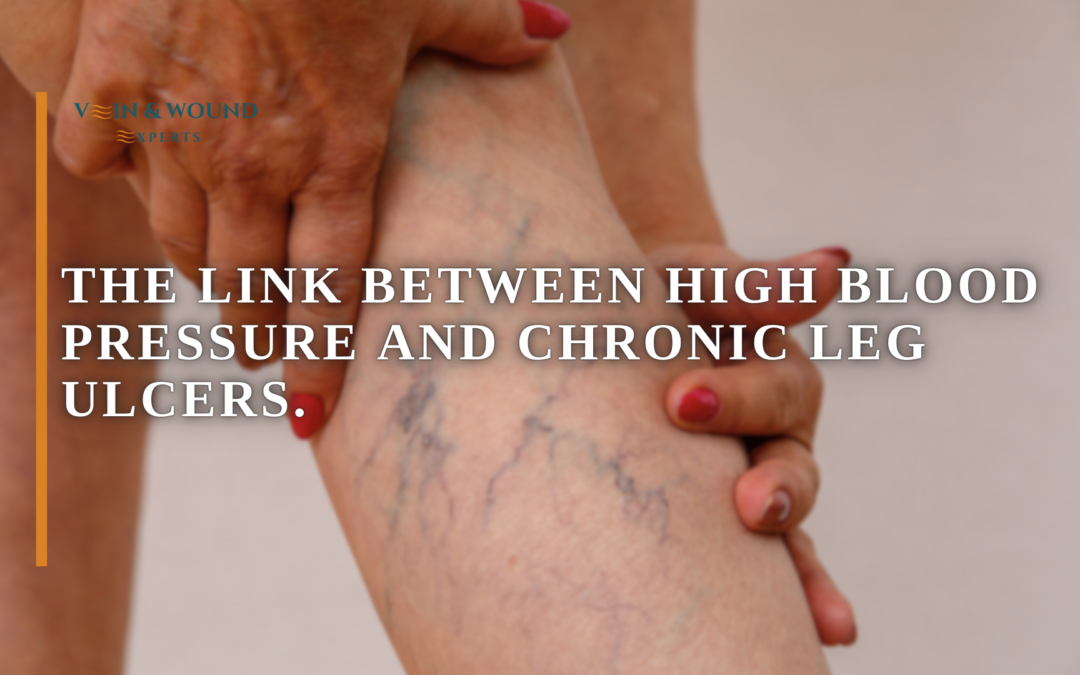
High Blood Pressure and Chronic Leg Ulcers 🩸
Imagine a silent pressure building within your body, not just affecting your heart or brain, but quietly dismantling the health of your skin and tissues from the ankles up. For many of our patients in Downey, the connection between systemic hypertension and the appearance of a non-healing wound is often a shocking revelation. High blood pressure is not merely a number on a cuff; it is a relentless force that fundamentally alters the micro-environment of your lower limbs. When your arterial system is under constant strain, the delicate balance of fluid exchange in your legs collapses, transforming a small scratch or a patch of dry skin into a debilitating, chronic leg ulcer that refuses to close.
This isn’t just about “bad luck” or aging. It is about a precise physiological breakdown where high blood pressure meets venous insufficiency. As a specialist dedicated to limb salvage and vascular health, I have seen how the intersection of these two conditions creates a “perfect storm” for tissue necrosis. If you are struggling with swelling, skin discoloration, or a wound that hasn’t improved in weeks, you are likely witnessing the direct impact of vascular hypertension on your body’s ability to repair itself.
How Hypertension Accelerates Vascular Damage and Ulcer Formation 🩺
The relationship between high blood pressure and chronic leg ulcers is rooted in the health of your endothelium—the thin membrane lining your blood vessels. Persistent hypertension causes these linings to become scarred and rigid. In the lower extremities, where blood must already fight gravity to return to the heart, this added pressure leads to “capillary leakiness.” Fluids and proteins escape into the surrounding tissue, causing chronic inflammation. This inflammatory state is the precursor to an ulcer, as it prevents oxygen-rich blood from reaching the skin surface.
For those dealing with high blood pressure and chronic leg ulcers, the clinical reality is that the skin becomes “starved.” We often see Martorell hypertensive ischemic ulcers in patients whose blood pressure has been poorly controlled for years. These specific wounds are notoriously painful because they are ischemic in nature, meaning the high pressure has actually narrowed the small arterioles to the point of starvation. Unlike typical venous ulcers, these are often located on the lateral or posterior side of the calf and require a highly specialized approach that addresses both the local wound and the systemic pressure issues.
Management Strategies for Non-Healing Wounds and Circulatory Health 🩹
Effective treatment requires us to look beyond the bandage. We cannot expect a wound to heal if the “pipes” feeding it are under constant, damaging pressure. At Vein & Wound Experts, our clinical priority is stabilizing the vascular environment. This involves a multi-pronged strategy that addresses the mechanical and chemical barriers to healing. If the systemic pressure is not managed, the local treatments—no matter how advanced—will likely fail to provide a long-term solution.
To successfully navigate the path to recovery, patients must focus on these critical areas:
-
📍 Strict Blood Pressure Regulation: Maintaining a consistent, healthy blood pressure range is the single most effective way to reduce the “shearing” force on your leg capillaries, allowing the skin to finally begin the granulation process.
-
📍 Advanced Compression Therapy: While it seems counterintuitive to add pressure to a high-pressure system, medical-grade compression helps the veins pump blood more efficiently, reducing the edema that keeps high blood pressure and chronic leg ulcers from closing.
-
📍 Specialized Debridement: Removing dead or infected tissue is essential to “jumpstart” the biological clock of a chronic wound, transforming it from a stagnant state back into an active healing phase.
-
📍 Vascular Mapping: Utilizing high-resolution ultrasound allows us to see exactly where the circulation is failing, ensuring that our interventions are targeted at the specific source of the congestion.
The Critical Intersection of Venous Insufficiency and High Blood Pressure 🦵
It is a common misconception that hypertension only affects the arteries. In reality, the entire circulatory loop is connected. When arterial pressure is high, it eventually places a burden on the venous side. For a resident in California dealing with the heat and long periods of standing or sitting, this vascular burden is amplified. The veins become distended, the valves fail, and the resulting “venous hypertension” causes blood to pool around the ankles. This pooling leaks iron-rich pigment into the skin—a condition known as hemosiderin staining—which weakens the tissue and makes it highly susceptible to ulceration.
Ignoring the early signs of this connection, such as “heavy” legs or darkened skin, is a gamble with your mobility. High blood pressure and chronic leg ulcers are symptoms of a systemic failure that requires an expert’s eye to resolve. We focus on restoring the integrity of the vascular wall and reducing the inflammatory markers that keep your body in a state of perpetual “repair mode” without ever actually finishing the job. By integrating blood pressure management with modern wound care technologies, we provide the body with the environment it needs to seal the skin and protect the underlying structures.
Healing a chronic ulcer is a marathon, not a sprint, especially when hypertension is a factor. However, with the right diagnostic tools and a commitment to vascular health, even the most stubborn wounds can be closed, returning you to a life free from the pain and restriction of chronic leg ulcers.

Andy Sharifi
Position