
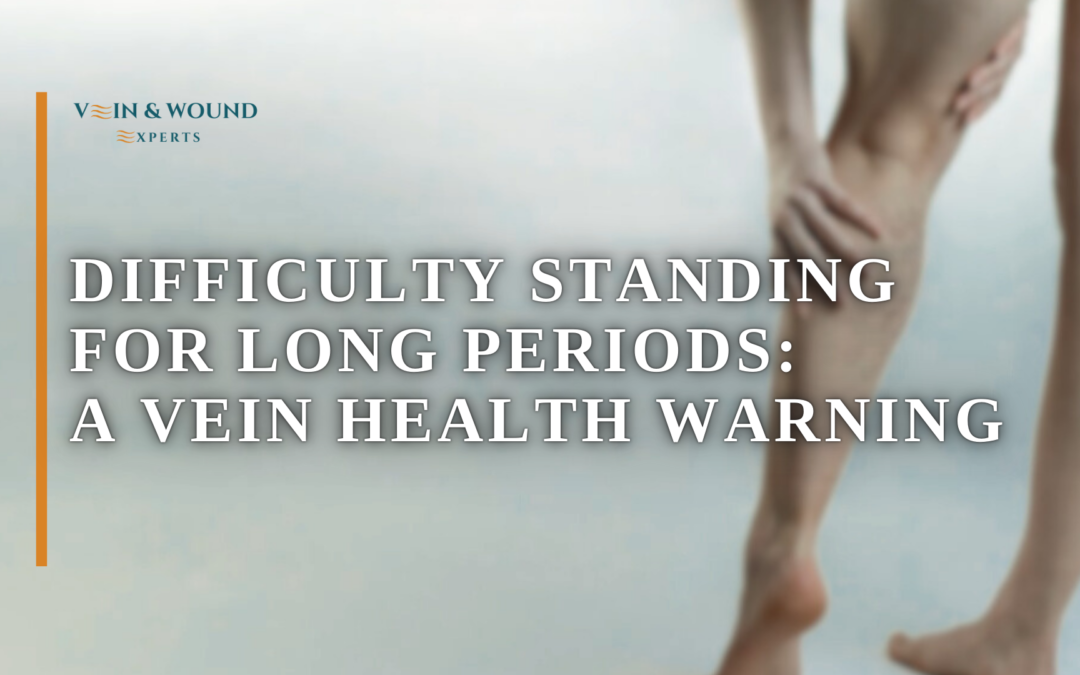
Difficulty Standing for Long Periods as a Vein Health Warning 🦵⚠️
Difficulty standing for extended periods is often blamed on fatigue, footwear, or aging. From a vascular medicine perspective, however, this limitation is frequently an early functional sign of compromised vein health. Standing places continuous gravitational pressure on the veins of the lower extremities. When venous circulation is healthy, the body compensates efficiently. When it is not, discomfort builds quickly and becomes impossible to ignore.
Why Prolonged Standing Stresses the Venous System 🩸🧍♂️
Veins in the legs are responsible for returning blood upward to the heart, working against gravity. This process relies on one-way valves and coordinated muscle contractions. While walking activates the calf muscles and supports venous return, standing still removes this assistance.
In individuals with venous dysfunction, blood begins to pool in the lower legs almost immediately. Venous pressure rises, tissues become congested, and discomfort develops. What feels like simple intolerance to standing is often a circulatory issue rather than a strength or endurance problem.
How Vein Dysfunction Creates Early Standing Intolerance 🧬🦶
When venous valves weaken, blood flows backward and accumulates in the lower extremities. This congestion reduces oxygen delivery and increases inflammatory signaling within surrounding tissues. The result is a heavy, aching, or tight sensation that intensifies the longer a person remains upright.
Unlike muscle fatigue, this discomfort does not improve by shifting weight or changing posture. Relief usually comes only with walking, leg elevation, or sitting, which temporarily reduces venous pressure.
Symptoms That Point to a Circulatory Cause 🔍🚶♀️
Standing-related discomfort caused by vein disease follows distinct patterns that differentiate it from orthopedic or neurological conditions.
• 🟢 Symptoms worsen the longer standing continues
• 🟢 Relief occurs when legs are elevated or in motion
These features reflect gravity-dependent blood pooling rather than joint damage or nerve compression.
Risk Factors That Make Standing More Difficult 📊🧠
Several factors increase the likelihood that standing intolerance is venous in origin. Prolonged occupational standing, excess body weight, pregnancy, aging, and family history all contribute to valve strain over time. Previous blood clots or leg injuries further compromise venous return.
In California, vascular specialists frequently evaluate individuals who remain active yet cannot tolerate static standing for routine activities such as cooking, shopping, or work-related tasks. This mismatch between activity level and tolerance often signals venous disease rather than general deconditioning.
Diagnostic Insight Into Standing-Related Leg Discomfort 🩻🔬
Venous evaluation focuses on function rather than structure. Duplex ultrasound imaging allows clinicians to observe blood flow direction, valve performance, and pressure changes while the patient is at rest and under load. This approach identifies reflux or obstruction that would not appear on joint or spine imaging.
Vein & Wound Experts in Downey, CA emphasize early functional symptoms like standing intolerance because they often precede visible vein changes or skin damage. Addressing venous dysfunction at this stage improves outcomes and limits progression.
Why Early Recognition Preserves Mobility 🦿📉
If venous disease remains untreated, tolerance for standing typically declines further. Swelling, skin changes, and chronic discomfort may follow, reducing independence and quality of life. Early evaluation allows targeted treatment that improves circulation and restores functional capacity.
When difficulty standing becomes a consistent limitation rather than an occasional inconvenience, it should be viewed as a vascular signal. From an expert standpoint, the body is indicating that the venous system is under strain—and that timely medical attention can prevent more serious complications from developing.
Andy Sharifi
Position