
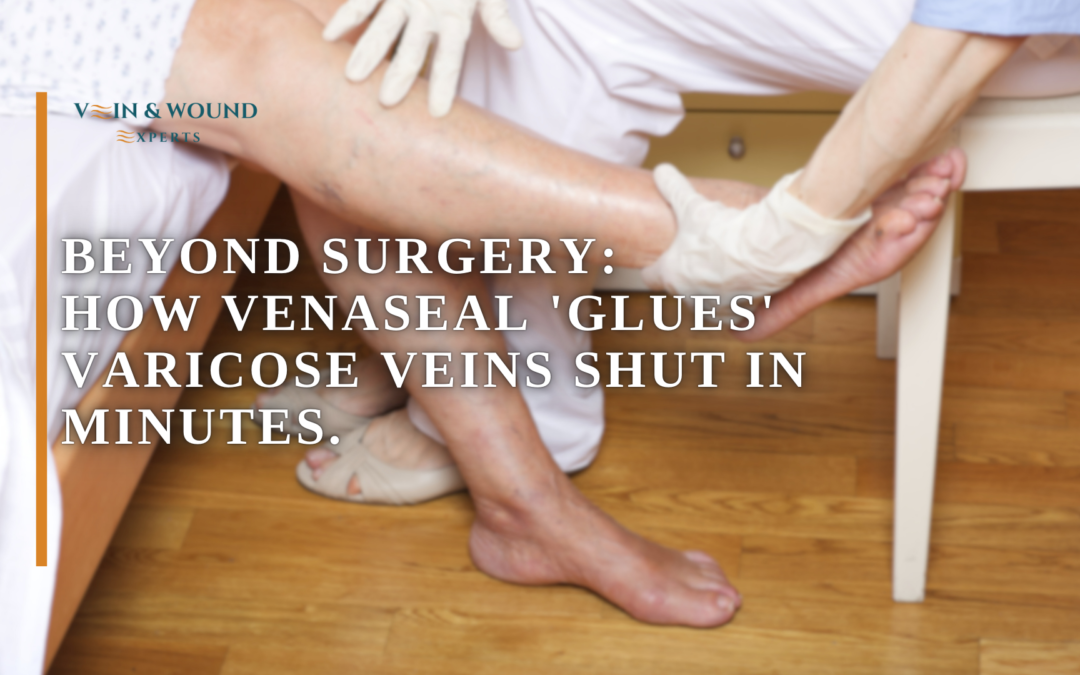
How VenaSeal Closes Varicose Veins Fast 🩸🦵
For decades, patients with varicose veins faced a difficult choice: live with discomfort, swelling, and visible vein bulges, or undergo surgery with incisions, anesthesia, and extended recovery. Modern advancements in vein care have transformed this landscape. One of the most significant innovations allows problematic veins to be sealed quickly and effectively without traditional surgery, changing patient expectations about treatment speed, comfort, and outcomes.
As a phlebologist with years of experience treating chronic venous insufficiency, I have seen patients who struggled for years with pain, fatigue, and leg swelling achieve relief in a single, minimally invasive session. The procedure uses a medical adhesive to close faulty veins, redirecting blood to healthy pathways and eliminating the bulging, painful veins that compromise circulation.
How Medical Adhesives Revolutionize Vein Treatment 💉⚡
Traditional vein surgery relied on physically removing or stripping affected veins. While effective, these procedures required anesthesia, post-operative care, and downtime. Laser or radiofrequency ablation improved recovery but still involved heat and potential discomfort. The introduction of a medical-grade adhesive system enables a different approach: the targeted vein is closed using a precise catheter, and the adhesive seals the vein from within.
Patients experience minimal discomfort because no incisions or general anesthesia are required. The procedure is typically completed in under an hour, with most individuals returning to regular activities immediately. The adhesive polymer triggers the vein walls to adhere permanently, while the body naturally reroutes blood through healthy veins, maintaining circulation without interruption.
Advantages Beyond Cosmetic Improvement 🌿✨
The benefits extend far beyond appearance. Patients with chronic venous insufficiency often experience heaviness, cramping, swelling, and night-time discomfort. By eliminating reflux in the targeted vein, the procedure reduces venous pressure, alleviates symptoms, and prevents progression to skin changes or ulcers. Clinical studies show significant improvement in quality of life and long-term reduction in complications.
Minimally invasive closure also reduces risks associated with heat-based ablation or surgical excision. Bruising and post-procedural soreness are usually minimal. Additionally, the adhesive procedure avoids nerve injury and allows treatment of veins that are difficult to address with traditional methods.
Patient Experience and Recovery 🏃♂️🧦
Recovery is simple and patient-friendly. Walking immediately after treatment is encouraged to support circulation, and compression stockings may be recommended for a short period. Patients report rapid symptom relief, with swelling and fatigue improving in days rather than weeks. Long-term follow-up ensures that veins remain closed and that overall venous health is maintained.
From a clinical standpoint, assessing vein anatomy with duplex ultrasound is crucial prior to treatment. Identifying reflux points ensures accurate adhesive placement and optimal outcomes. The procedure can also be combined with treatment of smaller tributary veins to achieve comprehensive improvement in both function and appearance.
The Future of Vein Care 💡🩹
Medical adhesive technology represents a broader trend toward less invasive, faster, and more patient-centered vein therapies. For individuals suffering from chronic venous disease, the ability to seal veins without surgery offers relief, convenience, and durable results. By preserving vein integrity and supporting natural circulation, this approach addresses both the underlying pathology and the quality-of-life impact.
Incorporating advanced closure techniques into vein management strategies allows patients to regain comfort, mobility, and confidence without the burdens of traditional surgery. Those with varicose veins can now achieve meaningful, long-lasting improvement with minimal disruption to daily life, marking a paradigm shift in how we approach chronic venous disease.
Accurate diagnosis, careful procedural planning, and post-treatment monitoring remain critical. When performed by experienced specialists, adhesive closure provides a safe, effective, and minimally invasive solution that transforms patient experiences, reduces complications, and supports overall vein health for years to come.
Andy Sharifi
Position