

Why Ankle Skin Changes Color Before Ulcers Form 🦵
Alt text: Discolored ankle skin showing early signs of ulcer development.
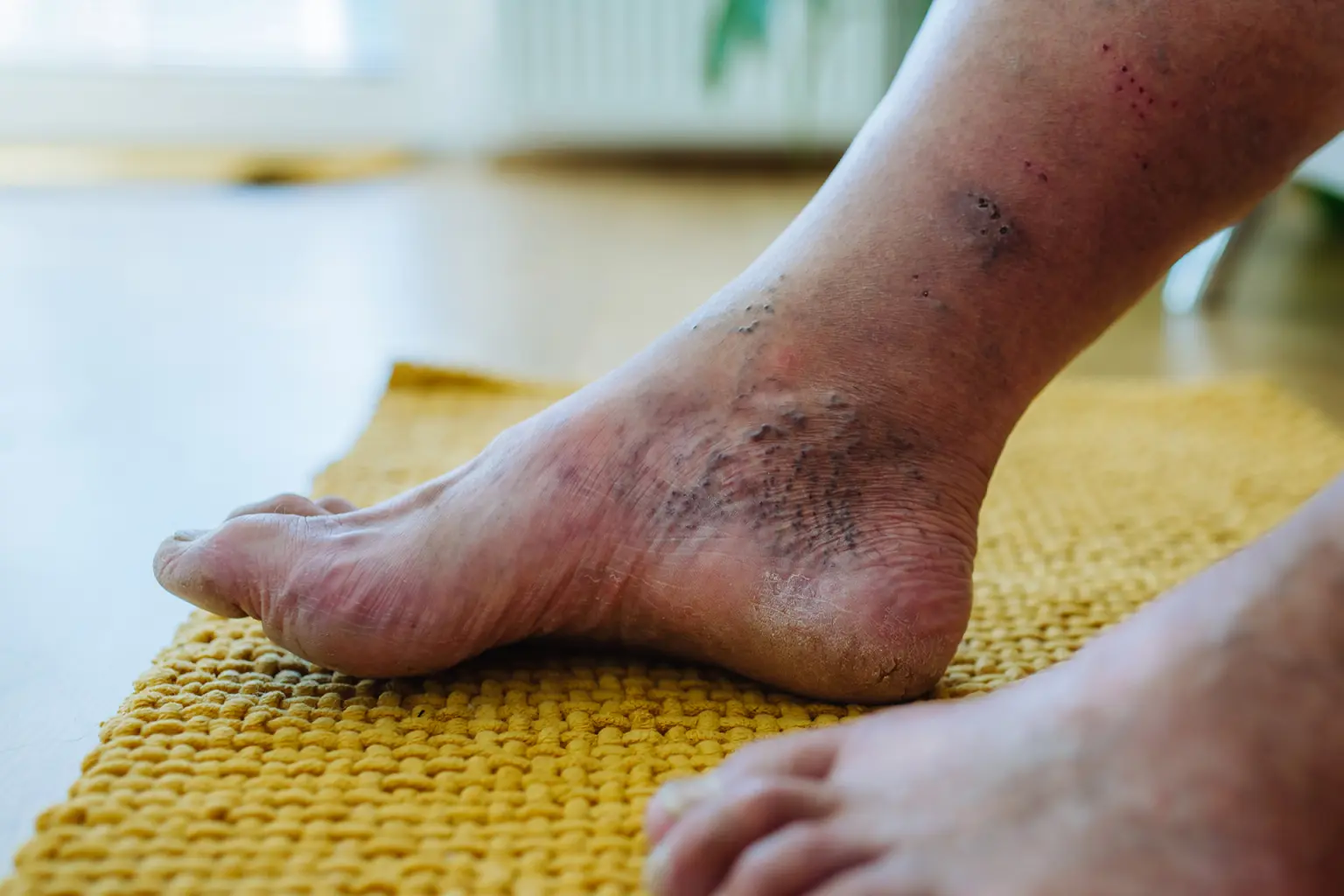
Skin discoloration around the ankles is often dismissed as simple irritation, aging, or dryness. In reality, these changes can sometimes signal advanced circulation problems developing beneath the surface. Long before an open wound appears, the skin may already be reacting to abnormal pressure inside damaged veins.
This progression usually happens gradually, which is why many people overlook the warning signs until symptoms become more serious. Recognizing early skin changes can help prevent complications linked to chronic venous disease.
🔍 Why Skin Color Changes Happen
Healthy veins move blood upward toward the heart with the help of tiny internal valves. When those valves weaken, blood begins pooling in the lower legs instead of circulating efficiently.
Over time, this pressure affects nearby tissues and small blood vessels. Fluid, inflammatory cells, and iron-rich blood components can leak into surrounding skin, leading to visible color changes around the ankles and lower legs.
This process is a common cause of ankle discoloration linked to long-term venous insufficiency.
🩸 How Venous Insufficiency Affects the Skin
Circulation problems do not only affect veins themselves. Persistent pressure changes also impact the skin and underlying tissue health.
As blood flow becomes less efficient, oxygen delivery decreases and inflammation increases. The skin may become more fragile, irritated, or thickened over time.
These effects are especially common in patients with chronic veins conditions that remain untreated for long periods.
🎨 Common Skin Changes That Appear Early
🟤 Brown or Darkened Areas
One of the earliest warning signs is brownish or reddish discoloration near the ankles. This develops when blood components collect beneath the skin after prolonged pressure buildup.
The color may gradually spread or become darker over time.
🧴 Dryness and Irritation
Affected skin may become itchy, flaky, or unusually sensitive. Chronic inflammation can weaken the skin barrier, making irritation more common.
🧱 Thickened or Hardened Skin
As circulation worsens, tissue beneath the skin may begin hardening or tightening. This can make the lower legs feel firm or uncomfortable compared to surrounding areas.
These visible skin changes often develop slowly, which makes them easy to ignore in early stages.
⚠️ How Discoloration Can Progress Into Ulcers
Without treatment, prolonged venous pressure can eventually damage the skin enough to create open wounds. The tissue becomes weaker, less oxygenated, and slower to heal after even small injuries.
This progression increases the risk of venous ulcers, particularly near the ankles where circulation pressure is often highest.
Once ulcers form, healing becomes much more difficult because the underlying circulation issue continues affecting the area.
🚨 Symptoms That Should Not Be Ignored
Certain warning signs suggest the condition may be advancing beyond mild cosmetic changes:
- Swelling around the ankles or calves
- Persistent heaviness or aching
- Burning or itching near darkened skin
- Tight or hardened tissue
- Slow healing after minor skin injuries
When discoloration appears alongside these symptoms, medical evaluation becomes especially important.
🩺 Why Early Treatment Matters
Treating circulation problems early may help prevent long-term skin damage and wound formation. Addressing the underlying venous dysfunction can reduce pressure buildup and improve blood movement in the lower limbs.
Early intervention is often far easier than treating advanced wounds after tissue breakdown has already occurred.
🌿 Preventing More Serious Vein Complications
Ankle discoloration is not always just a cosmetic issue. In many cases, it reflects ongoing circulation stress affecting the skin and surrounding tissue health.
Paying attention to these early warning signs can help identify venous insufficiency before more severe complications develop. Proper evaluation and timely management play an important role in reducing the risk of ulcer formation and long-term tissue damage.

Andy Sharifi
Position